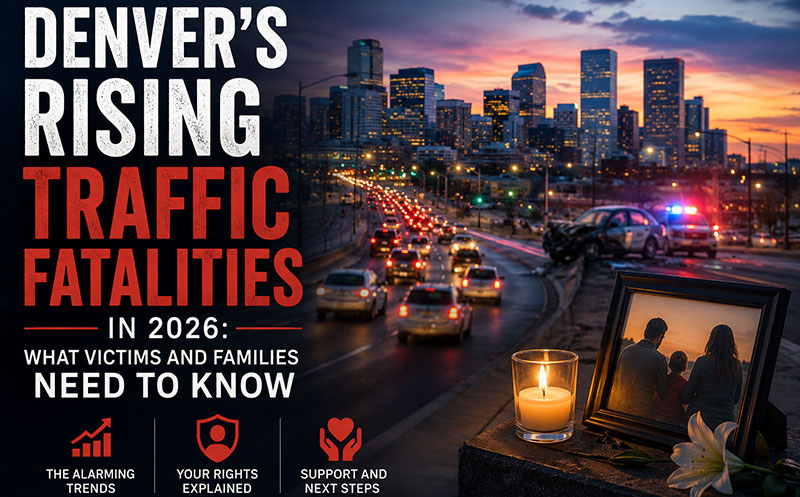
Every year, the stretch of road between Memorial Day and Labor Day earns the same grim nickname: the 100 Deadliest Days of Summer. It is not a metaphor. It is a pattern backed by years of data, and it starts right now.
Between May and September of 2023, there were 351 fatal crashes in Colorado, according to the Colorado Department of Transportation (CDOT). That is not a spike from an anomalous year. It is a predictable seasonal surge that repeats, largely for the same reasons, every single summer. More vehicles on the road. More out-of-state drivers unfamiliar with Colorado terrain. More motorcycles. More late nights. More mountain passes tackled by people who have no business being on them.
Summer in Colorado is genuinely beautiful. It is also, statistically, when your odds of being in a serious crash are at their highest.
Why Summer Is Different
The 100 Deadliest Days designation exists because the numbers demand it. Summer travel volume in Colorado is not a modest increase over the rest of the year. It is a surge — millions of visitors joining millions of residents on a road network not designed for that load.
A few factors drive the spike more than others.
Teen and young adult drivers. School is out. That means more inexperienced drivers on the road, more frequently, during peak hours. Nationally, the fatal crash rate for teen drivers is roughly three times higher during the summer than in any other season. CDOT has specifically flagged this demographic as a primary contributor to the summer fatality pattern.
Alcohol and cannabis impairment. Summer means outdoor events, concerts, festivals, and long weekend gatherings. Impaired driving is one of the leading causes of fatal crashes in Colorado year-round, but the opportunity for impaired driving increases significantly when event density increases. CDOT consistently emphasizes planning a sober ride before any event, not after.
Speeding. In 2021, 29 percent of all Colorado traffic fatalities were speeding-related, according to CDOT. Mountain highways and long straight stretches of rural road invite people to push the limits. The consequences on those roads, when something goes wrong, are catastrophically unforgiving.
Motorcycles. Colorado’s riding season peaks between Memorial Day and Labor Day. Motorcyclists are sharing roads with drivers who have not seen a motorcycle all winter and whose eyes are not calibrated to look for them. Motorcycle fatalities spike during these months every year.
Distracted driving. This one does not have a season, but its collision with summer driving patterns creates a dangerous combination. More vehicles, more congestion, more driver frustration, and more phones in hands add up to more crashes.
Mountain Roads Carry Their Own Risk Profile
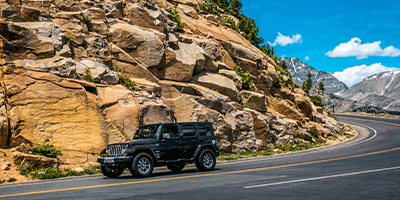
For Denver-area drivers, summer often means I-70. The stretch of highway between Denver and the ski resorts does not stop being dangerous in the off-season. It just changes character.
Summer weekends on I-70 bring recreational traffic volumes that rival ski season, paired with a different set of hazards: afternoon thunderstorms that materialize fast, wildlife crossings at dawn and dusk, construction zones with compressed lanes, and drivers who underestimate how quickly mountain weather changes. A trip to Breckenridge or Vail can turn serious in ways that flat-highway driving simply does not.
CDOT data consistently shows that Gilpin, Clear Creek, Summit, and Eagle counties, all along the I-70 mountain corridor, see elevated crash rates during summer months. The combination of canyon curves, significant grade changes, and high traffic volumes creates conditions where even a minor mechanical issue or a single moment of inattention can become catastrophic.
What the Law Actually Requires You to Do After a Crash
If a crash happens, the immediate aftermath is chaotic for almost everyone. But what you do in those first hours and days matters enormously, both for your physical recovery and for any legal claim you may need to pursue.
Colorado law requires drivers involved in a crash to stop, provide identification and insurance information, and render reasonable assistance to anyone who is injured. Leaving the scene of a crash involving injury or death is a felony. These are obligations, not options.
Beyond the legal minimums, the decisions you make after a crash shape everything that follows.
Get medical attention, even if you feel fine. Adrenaline masks pain. Traumatic brain injuries, soft tissue damage, and internal injuries do not always announce themselves at the scene. Gaps in medical treatment give insurance adjusters exactly what they need to argue that your injuries were not serious or were caused by something other than the crash.
Document everything you safely can. Photos of the vehicles, the road conditions, the intersection or stretch of highway, and any visible injuries. Names and contact information for witnesses. The responding officer’s badge number and the case number. These details disappear quickly.
Be careful what you say. “I’m fine” or “I’m sorry” at the scene can be used against you later. You are not required to make a statement beyond providing your information.
Contact an attorney before talking to the other driver’s insurance company. Insurance adjusters are trained to minimize payouts. They will call quickly, often within 24 hours, when you are still shaken and before you know the full extent of your injuries. Anything you say becomes part of the record.
The Legal Picture in Colorado
Colorado is a modified comparative negligence state. That means you can recover compensation even if you were partially at fault for a crash, as long as your share of fault does not exceed 50 percent. Your recovery is reduced by your percentage of fault. This matters for summer crashes in particular, because road conditions, construction zones, and unusual driving situations can make fault genuinely complicated to assign.
Colorado’s statute of limitations for personal injury claims arising from motor vehicle crashes is generally three years from the date of injury. Three years sounds like plenty of time. It is not, for practical purposes, because evidence erodes fast. Surveillance footage is typically overwritten within 30 to 90 days. Witness memories fade. Physical road conditions change. The investigation that insurance companies run starts immediately. Yours should too.
If a government entity could bear any responsibility, such as a poorly marked construction zone, a road defect, or inadequate signage, the notice requirements are stricter and the timelines are shorter. This is not a situation where it is safe to wait and see.
Getting Help After a Crash

Bowman Law, LLC is a Denver-based personal injury firm that handles car accidents, motorcycle accidents, trucking accidents, pedestrian accidents, and more across Colorado’s Front Range. The firm intentionally limits its caseload so that clients work directly with their attorney, not a rotating cast of paralegals.
Bowman Law offers free consultations and works on a contingency basis, meaning there is no fee unless you recover compensation. If you or someone you know is injured in a crash during these 100 days, the most important thing you can do is understand your rights before the window to act on them closes.
The summer is here. The roads are busy. Pay attention out there.